If you love the idea of mountain-style living, you may be asking a bigger question than it first appears: do you want a true foothills lifestyle, or do you want a suburb that borrows some mountain character? That choice matters because Evergreen and the Denver suburbs offer very different daily experiences. If you are weighing privacy, land, commuting, recreation, and long-term ownership realities, this guide will help you compare them more clearly. Let’s dive in.
Evergreen feels like a foothills community
Evergreen is not a typical metro suburb. Jefferson County’s Evergreen Area Plan describes it as a rural mountain community with scattered village-like activity centers, and it says the area should remain scaled to that character over time. In other words, Evergreen has its own identity, rather than serving as a standard extension of Denver.
That distinction shows up in how people live there. The 2020 Census counted 9,307 residents in Evergreen, and the community is heavily owner-occupied at 88.8 percent. The median owner-occupied home value was $829,400, and the mean travel time to work was 28.8 minutes.
For many buyers, that adds up to a place shaped by long-term homeownership, space, and a more rural rhythm. If you are looking for mountain-style living that feels rooted in the foothills, Evergreen is built around that idea from the ground up.
Denver suburbs offer a different kind of ease
Denver suburbs can still appeal if you want a home with a little more breathing room and easier access to the city. Their physical layout is generally more standardized, with predictable street patterns, smaller lots, and housing forms designed around subdivision living. That consistency can make day-to-day life feel simpler.
The City and County of Denver’s zoning code describes suburban neighborhoods as areas with single-unit and two-unit residential forms, low lot coverage, yard space, generous setbacks, and front-loaded garages. Some suburban districts allow minimum lot areas as low as 3,000 square feet. That is a very different land pattern from Evergreen’s acreage-based planning.
If your version of mountain-style living means a home with a view, mature trees nearby, or a quieter feel without fully leaving the metro routine, a Denver suburb may check those boxes more easily. But it usually will not deliver the same level of seclusion, topographic variety, or rural mountain character that Evergreen is designed to preserve.
Home sites differ in a major way
One of the biggest differences between Evergreen and Denver suburbs is the land itself. In Evergreen, planning is shaped by slope, terrain, and environmental conditions. In Denver suburbs, planning is more standardized and lot sizes are generally much smaller.
Jefferson County’s plan for Evergreen includes densities that range from about 1 dwelling unit per acre to 1 dwelling unit per 10 acres in different areas. Rural clusters average about 1 dwelling unit per 17.5 acres, and some lots in those areas can be as small as 5 acres. In steep-slope areas, density can range from 1 dwelling unit per 5 acres to 1 per 20 acres, depending on the land.
What that means for you
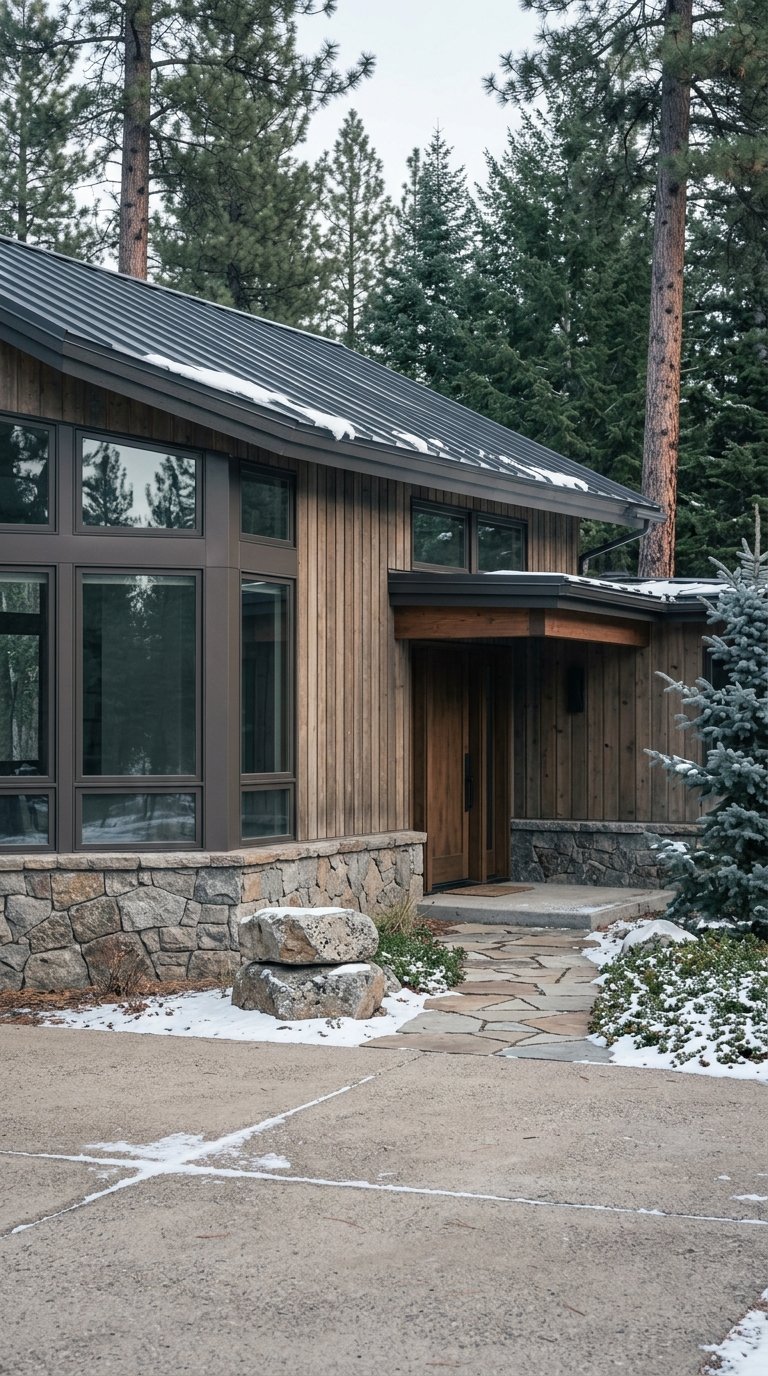
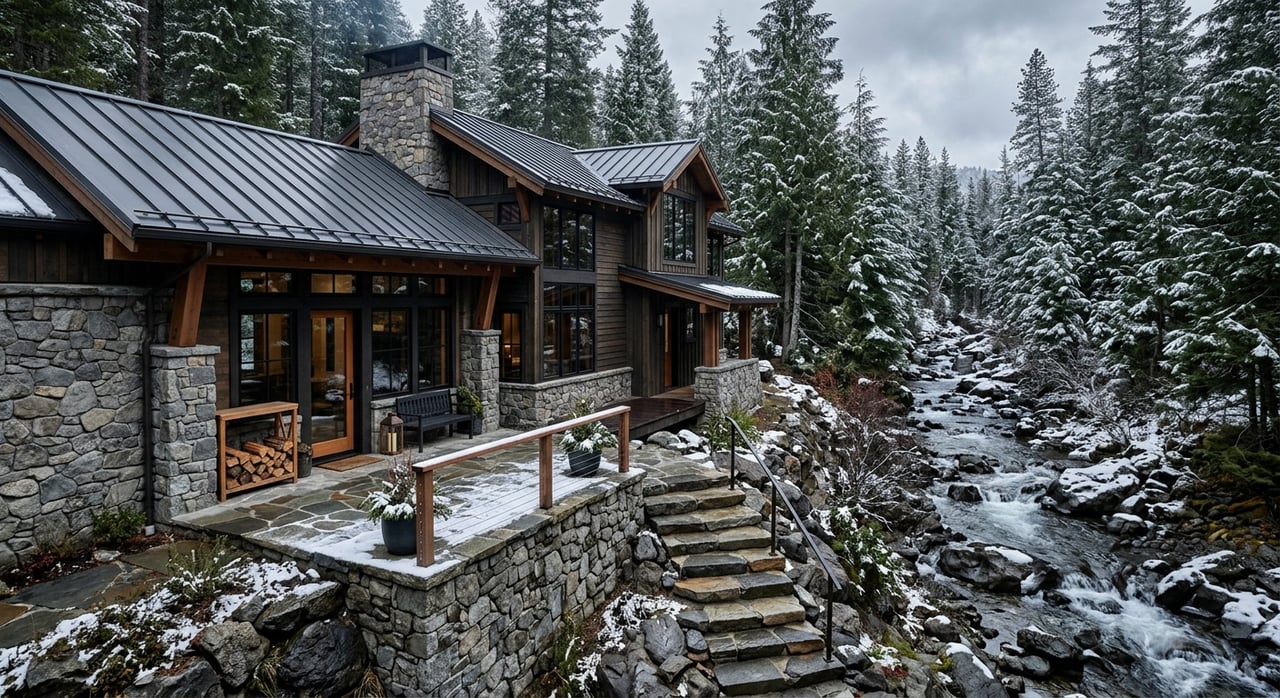
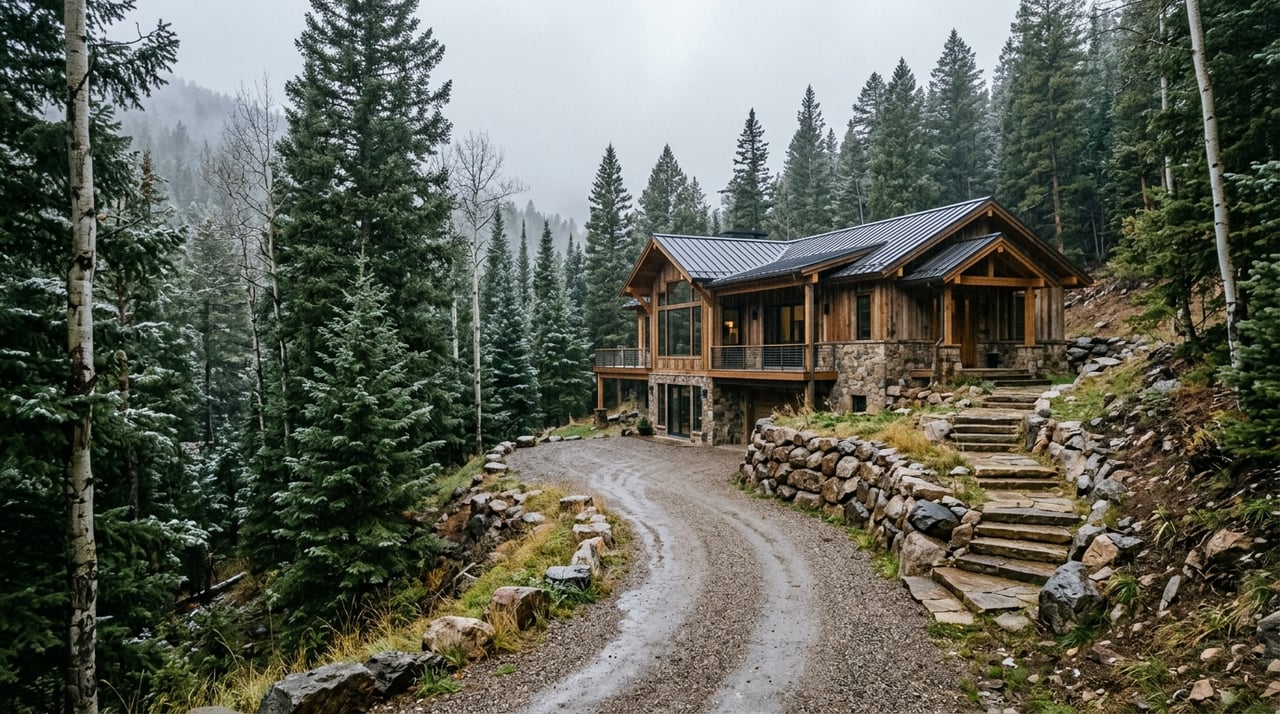
If you want acreage, privacy, and a home that feels integrated into the land, Evergreen is usually the better fit. Homes there are often shaped by topography, tree cover, and natural site conditions. That can create a setting that feels more personal and more connected to the landscape.
If you prefer a more predictable lot size, less site complexity, and a housing search that is easier to compare from one neighborhood to the next, Denver suburbs tend to offer that. The tradeoff is that you are usually choosing a more compact and uniform environment.
Outdoor access is part of Evergreen living
For many buyers, mountain-style living is not only about the house. It is also about what you can do once you walk out the door. On that front, Evergreen stands apart.
Jefferson County says its trail system exceeds 275 miles, and it specifically notes rough, natural-surface trails at Elk Meadow Park in Evergreen. Dedisse Park and Evergreen Lake add another layer to the lifestyle, with boating in summer, ice skating in winter, fishing year-round, and trail connections into the broader Evergreen trail system.
That kind of access is not just a weekend bonus. It can shape how you spend your mornings, evenings, and seasons. If outdoor recreation is central to how you want to live, Evergreen offers a more direct foothills experience than a typical suburban setting.
Commuting works differently in Evergreen
Evergreen is not isolated, but getting around does require a different mindset than in many Denver suburbs. Jefferson County’s plan notes that the area relies on a limited road network that funnels traffic onto State Highway 74, Evergreen Parkway, Jefferson County 73, and I-70. The same plan also points out that growth creates tradeoffs between road expansion, congestion, and transportation alternatives.
That means your daily routine matters a lot when deciding whether Evergreen fits. If you are comfortable with foothills driving, changing weather, and a more limited set of main routes, it can work well. If you need repeated city trips, multiple stops across the metro, or a highly predictable commute, a suburb may feel easier.
Transit options to know
RTD’s Route EV serves Evergreen Parkway, Highway 74, Evergreen Park-n-Ride, Bergen Park Park-n-Ride, and Downtown Denver Civic Center. That gives Evergreen a direct transit connection into Denver, even though it does not have the same rail structure found elsewhere in the metro.
Many Denver suburbs have stronger rail-based access. RTD notes rail service through corridors that include Westminster on the B Line, Aurora on the R Line, Douglas County on the E Line, and the southwest corridor serving Englewood and Littleton. For buyers who depend on rail commuting or frequent metro travel, that can be a meaningful advantage.
Ownership in Evergreen comes with more due diligence
Mountain-style living can be rewarding, but it also asks more of you as an owner. In Evergreen, wildfire risk is one of the most important realities to understand early.
Jefferson County says it has the second highest wildfire risk of all Colorado counties and greater wildfire risk than 98 percent of U.S. counties. County wildfire materials also identify Evergreen and Conifer among the highest-risk areas and emphasize defensible space, slash removal, evacuation planning, and fire restrictions.
That does not mean Evergreen is the wrong choice. It means you should go in with clear eyes and a solid plan. Buyers who thrive in mountain markets usually value the lifestyle enough to take these ownership responsibilities seriously.
Other mountain-property factors
The Evergreen Area Plan also highlights other constraints that can affect property decisions, including water availability, steep slopes, wildfire, visual resources, wildlife, historic structures, and transportation. It adds that utility providers should review proposed rezonings and plats for adequate service, and it identifies broadband as a service goal.
For you as a buyer, this means mountain homes and land often require a more thoughtful evaluation process. The setting can be extraordinary, but the details matter more than they might in a standard subdivision.
Which choice fits your lifestyle best?
If you are trying to decide between Evergreen and a Denver suburb, the clearest answer usually comes from your daily priorities. Both can support a mountain-inspired lifestyle, but they do it in very different ways.
Evergreen is often the better fit if you want:
- Larger home sites or acreage
- More privacy and separation from neighbors
- A foothills setting with strong outdoor access
- A rural mountain character that is protected by local planning
- A home search that includes lakefront, estate, or land opportunities
A Denver suburb may be the better fit if you want:
- Smaller lots and more standardized neighborhood patterns
- Simpler infrastructure and more predictable daily logistics
- Stronger rail-based transit options in the metro
- Easier access for frequent city commuting and multi-stop routines
- A more conventional suburban ownership experience
The real question is how you want to live
Mountain-style living means different things to different buyers. For some, it means waking up among trees, having real acreage, and accepting the added responsibilities that come with a foothills property. For others, it means finding a comfortable home base near Denver with a little more space and easy access to the city.
Evergreen stands out when you want the real thing: a rural mountain community with its own pace, terrain-sensitive homesites, strong outdoor access, and a lifestyle shaped by the foothills. Denver suburbs stand out when you want some of that atmosphere paired with more standardized housing patterns and easier metro logistics.
If you are weighing Evergreen against the suburbs, the most helpful next step is to compare not just price or square footage, but your routine, your tolerance for mountain-property complexity, and the kind of setting you want to come home to. If you want guidance tailored to Evergreen acreage, lakefront, estate, or foothills homes, connect with Yvette Putt for a thoughtful, data-informed conversation.
FAQs
Is Evergreen considered a Denver suburb?
- Not in the usual sense. Jefferson County describes Evergreen as a rural mountain community with its own character, rather than a standard metro suburb.
How much land can you get with a home in Evergreen?
- It depends on the specific area and slope conditions, but Jefferson County’s plan uses acre-based densities, with some rural-cluster lots as small as 5 acres and other areas planned at much lower densities.
Can you commute from Evergreen to Denver?
- Yes. Evergreen has road access into the metro and RTD Route EV connects Evergreen and Downtown Denver, but the area also has a limited road network and weather-sensitive driving conditions.
What is the biggest ownership issue with Evergreen homes?
- Wildfire preparedness is one of the biggest factors. Jefferson County emphasizes defensible space, slash removal, evacuation planning, and fire restrictions.
Are Denver suburbs better for transit than Evergreen?
- Often, yes. Many Denver suburbs have rail access through RTD lines, while Evergreen relies on a bus corridor and Park-n-Ride options rather than commuter rail.
Is Evergreen self-contained for daily needs?
- Not fully. The Evergreen Area Plan says the community should meet everyday needs, but not all city-level amenities, and some secondary commercial needs are expected outside the area.